

Metastasis and Circadian Rhythm
Group Leader:
Dr Zoi Diamantopoulou
Our lab investigates the role of the circadian rhythm in cancer metastasis, with a particular focus on Circulating Tumour Cells (CTCs). Building on our discovery that the metastatic dissemination of breast cancer occurs predominantly during sleep, we aim to determine how the circadian rhythm influences CTC biology, metastatic progression and the response to anticancer therapies.
By integrating in vivo mouse models, microfluidics, robotic technologies, genetic engineering, next-generation sequencing, and spatial transcriptomics with analyses of patient blood samples, we aim to uncover the molecular mechanisms linking circadian rhythms to metastasis across multiple cancer types and identify new therapeutic vulnerabilities.
Ultimately, our research seeks to harness the biology of time to develop innovative anti-metastatic strategies and advance chronotherapy, paving the way for more effective cancer treatments.

Lab Reports
click here to read

Recent Publications
click here to read

Lab Members
click here to read
Recent Publications
2026
Pall GS, Melo C, Ortega-Campos SM, Diamantopoulou Z. Designing the Perfect Strike Against Cancer: Clocking In with the Circadian Rhythm. Annual Review of Cancer Biology. 2026;10:157-178
2025
Saini M, Castro-Giner F, Hotz A, Sznurkowska MK, Nüesch M, Cuenot FM, Budinjas S, Bilfeld G, Ildız ES, Strittmatter K, Krol I, Diamantopoulou Z, Paasinen-Sohns A, Waldmeier M, Cássio R, Kreutzer S, Kontarakis Z, Gvozdenovic A, Aceto N. StealTHY: An immunogen-free CRISPR platform to expose concealed metastasis regulators in immunocompetent models. Cell. 2025.
2023
Diamantopoulou Z, Gvozdenovic A, Aceto N. A new time dimension in the fight against metastasis. Trends Cell Biol. 2023.
Ginn L, Maltas J, Baker MJ, Chaturvedi A, Wilson L, Guilbert R, Amaral FMR, Priest L, Mole H, Blackhall F, Diamantopoulou Z, Somervaille TCP, Hurlstone A, Malliri A. A TIAM1-TRIM28 complex mediates epigenetic silencing of protocadherins to promote migration of lung cancer cells. Proc Natl Acad Sci U S A. 2023;120(40):e2300489120.
2022
Scheidmann MC, Castro-Giner F, Strittmatter K, Krol I, Paasinen-Sohns A, Scherrer R, Donato C, Gkountela S, Szczerba BM, Diamantopoulou Z, Muenst S, Vlajnic T, Kunz L, Vetter M, Rochlitz C, Taylor V, Giachino C, Schroeder T, Platt RJ, Aceto N. An In Vivo CRISPR Screen Identifies Stepwise Genetic Dependencies of Metastatic Progression. Cancer Res. 2022;82:681-694.
Diamantopoulou Z, Castro-Giner F, Schwab FD, Foerster C, Saini M, Budinjas S, Strittmatter K, Krol I, Seifert B, Heinzelmann-Schwarz V, Kurzeder C, Rochlitz C, Vetter M, Weber WP, Aceto N. The metastatic spread of breast cancer accelerates during sleep. Nature. 2022;607:156-162.
2020
Diamantopoulou Z, Castro-Giner F, Aceto N. Circulating tumor cells: Ready for translation? J Exp Med. 2020;217.
2018
Woroniuk A, Porter A, White G, Newman DT, Diamantopoulou Z, Waring T, Rooney C, Strathdee D, Marston DJ, Hahn KM, Sansom OJ, Zech T, Malliri A. STEF/TIAM2-mediated Rac1 activity at the nuclear envelope regulates the perinuclear actin cap. Nature Communications. 2018;9:2124.
Chatzileontiadou DSM, Tsika AC, Diamantopoulou Z, Delbé J, Badet J, Courty J, Skamnaki VT, Parmenopoulou V, Komiotis D, Hayes JM, Spyroulias GA, Leonidas DD. Evidence for Novel Action at the Cell-Binding Site of Human Angiogenin Revealed by Heteronuclear NMR Spectroscopy, in silico and in vivo Studies. ChemMedChem. 2018;13:259-269.
2017
Diamantopoulou Z, White G, Fadlullah MZH, Dreger M, Pickering K, Maltas J, Ashton G, MacLeod R, Baillie GS, Kouskoff V, Lacaud G, Murray GI, Sansom OJ, Hurlstone AFL, Malliri A. TIAM1 Antagonizes TAZ/YAP Both in the Destruction Complex in the Cytoplasm and in the Nucleus to Inhibit Invasion of Intestinal Epithelial Cells. Cancer Cell. 2017;31:621-634.e626.
2015
Whalley HJ, Porter AP, Diamantopoulou Z, White GRM, Castañeda-Saucedo E, Malliri A. Cdk1 phosphorylates the Rac activator Tiam1 to activate centrosomal Pak and promote mitotic spindle formation. Nature Communications. 2015;6:7437.
Diamantopoulou Z, Gilles ME, Sader M, Cossutta M, Vallée B, Houppe C, Habert D, Brissault B, Leroy E, Maione F, Giraudo E, Destouches D, Penelle J, Courty J, Cascone I. Multivalent cationic pseudopeptide polyplexes as a tool for cancer therapy. Oncotarget. 2017;8:90108-90122.
2012
Pappa EV, Zompra AA, Diamantopoulou Z, Spyranti Z, Pairas G, Lamari FN, Katsoris P, Spyroulias GA, Cordopatis P. Structure-activity studies of lGnRH-III through rational amino acid substitution and NMR conformational studies. Biopolymers. 2012;98:525-534.
Diamantopoulou Z, Kitsou P, Menashi S, Courty J, Katsoris P. Loss of receptor protein tyrosine phosphatase β/ζ (RPTPβ/ζ) promotes prostate cancer metastasis. J Biol Chem. 2012;287:40339-40349.
2011
Pappa EV, Zompra AA, Spyranti Z, Diamantopoulou Z, Pairas G, Lamari FN, Katsoris P, Spyroulias GA, Cordopatis P. Enzymatic stability, solution structure, and antiproliferative effect on prostate cancer cells of leuprolide and new gonadotropin-releasing hormone peptide analogs. Biopolymers. 2011;96:260-272.
2010
Diamantopoulou Z, Bermek O, Polykratis A, Hamma-Kourbali Y, Delbé J, Courty J, Katsoris P. A Pleiotrophin C-terminus peptide induces anti-cancer effects through RPTPβ/ζ. Molecular Cancer. 2010;9:224.
2007
Bermek O, Diamantopoulou Z, Polykratis A, Dos Santos C, Hamma-Kourbali Y, Burlina F, Delbé J, Chassaing G, Fernig DG, Katsoris P, Courty J. A basic peptide derived from the HARP C-terminus inhibits anchorage-independent growth of DU145 prostate cancer cells. Exp Cell Res. 2007;313:4041-4050.

PhD Student

Carolina Lopes Melo
I’m a PhD student exploring how the circadian rhythm regulates the generation of circulating tumour cells. Originally from Portugal, I moved to Scotland to learn about this emerging field in cancer research and, hopefully, contribute to new chronotherapy strategies for cancer patients. It’s exciting to work surrounded by people with such diverse expertise and ideas. Outside the lab, I try to stay creative through knitting, pottery, and design, though more often you’ll find me simply hanging out with friends.
Postdoctoral Fellow
Chloe Petitpas
I have started my first postdoctoral position at the CRUK SI, where I am investigating how the circadian rhythm drives metastatic growth by shaping the plasticity of the tumour microenvironment, with a focus on immune cells. I did my PhD in Marseille, France, during which I developed my interest in immunology by studying how chronic wounds and inflammation promote tumorigenesis in epithelial junctions. Out of the lab, I enjoy spending time in nature with my family, practising diverse sports, and watching anime.
Principal Scientific Officer
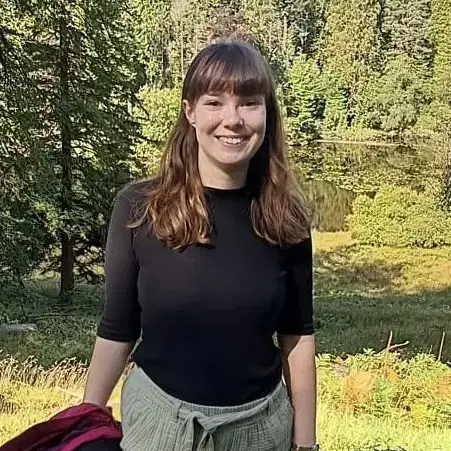
Emily Kay
I joined the institute in 2015 to do my PhD investigating the role of proline metabolism in the tumour microenvironment. After my PhD, I continued this research, focussing on the immune microenvironment, first as a Post doc and then as an Associate Scientist. In 2026, I moved to Zoi’s group where I work on how circadian rhythms affect cancer metastasis and interactions between cancer cells and the tumour microenvironment, as well as supporting the day to day running of the lab. Outside of the lab I enjoy singing in choirs, swimming and reading books.
Msci Student
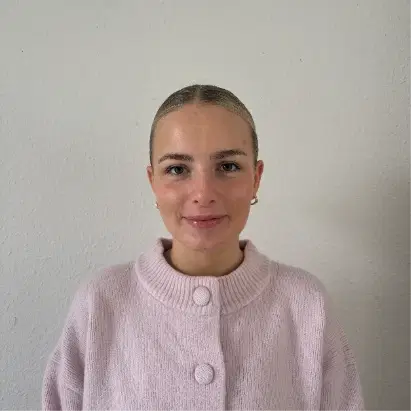
Scarlet Davies
I am a 4th year Immunology MSci student from the University of Glasgow, and I am undergoing my work placement year carrying out research within circadian rhythm and cancer metastasis. Currently investigating the expression of circadian associated genes in pancreatic and colorectal cancer models, exploring potential disruptions to circadian clock in tumour tissue. Out with the lab I enjoy running, all types of music and travelling to as many countries as I can!