

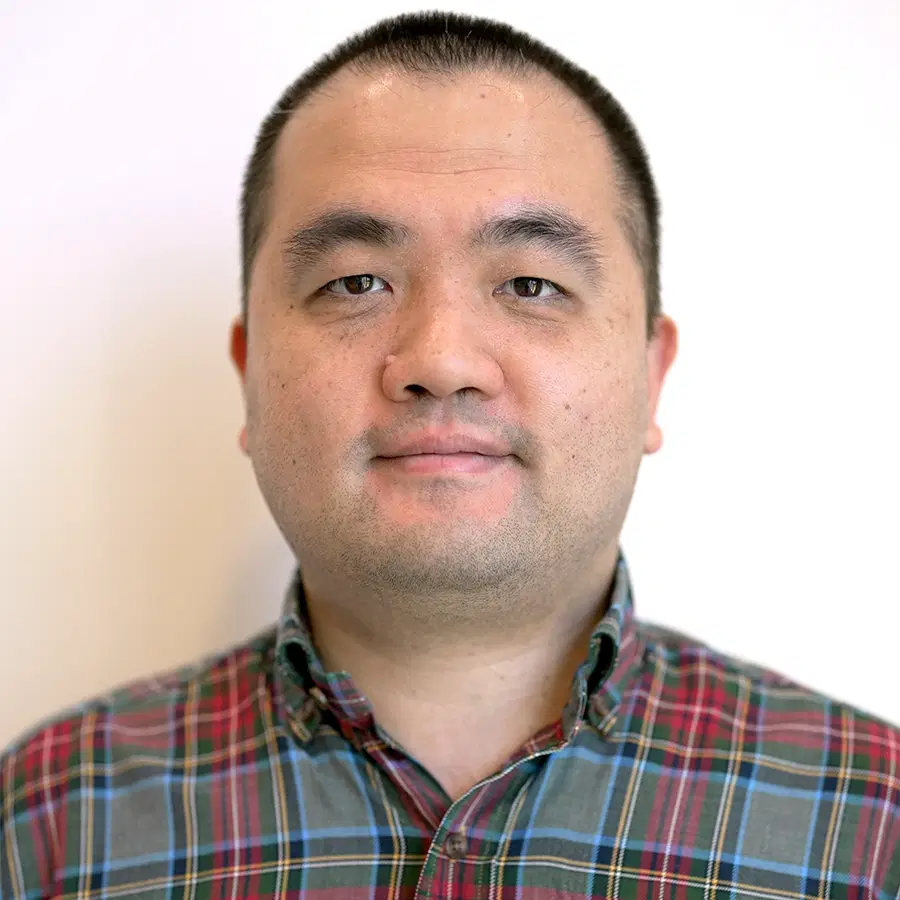
Dr Xiao Fu
Integrative Modelling
Complex and dynamic interactions between cancer cells and elements of the tumour microenvironment shape tumour progression and contribute to therapy resistance. To unravel the biological complexity, and to uncover novel vulnerabilities to target, our lab focuses on developing diverse computational approaches, ranging from mechanistic modelling and computer simulations to spatial data analysis and machine learning. Our vision is that these approaches, in integration with clinical and pre-clinical experimental research, will increase our insights into the fundamental mechanisms underpinning tumour progression and therapy resistance and, ultimately, improve our strategies for stratification and treatment of patients.
The Integrative Modelling lab was established in August 2023. We are delighted to have welcome team members to the lab in 2024 and 2025. In our lab, we are interested in developing computational approaches to investigate the co-evolutionary dynamics and organisational principles of the tumour and its microenvironment. Our goal is to reveal a tumour’s vulnerabilities through the lens of computational modelling and identify novel strategies to tackle therapy resistance. We collaborate broadly with cancer biologists, experimentalists, and clinicians, in an iterative manner, to ensure the biological relevance and translational value of our computational research.

Biography
click here to read

Recent Publications
click here to read
Biography
I established the group in August 2023. I am originally from Sichuan, a southwestern province in China. Throughout my education, I always enjoyed applying perspectives and principles of math and physics to understand complex systems. My research journey has since evolved to the interface between computation and biology, with a growing interest in decoding the organisational principles of the tumour microenvironment. I am very excited about working with researchers from diverse backgrounds and motivated to support others develop interdisciplinary skills and achieve their career goals. Outside work, I enjoy nature, ping-pong, and cooking Sichuan food.
Education and qualifications
- 2017: PhD, Biological Physics, Indiana University, Bloomington, USA
- 2012: BSc, Physics, Nanjing University, Jiangsu, China
Appointments
- 2023–present: Beatson Research Fellow, CRUK Scotland Institute, Glasgow, UK
- 2017–2023: Postdoctoral Researcher, Francis Crick Institute, UK
Awards and Fellowships
- 2022: Prostate Cancer Research grant, co-led by Erik Sahai and Anna Wilkins
- 2012: Eli Lilly Fellowships in Biocomplexity, Indiana University Bloomington, Indiana, USA
- 2008: People’s Scholarship, Nanjing University, Nanjing, China
Recent Publications
2026
van den Berg NI, Elphick M, Mulder K, Bouricha O, Sadeghi-Alavijeh O, Fu X, Turajlic S. Immunometabolic gatekeeping: How tissue metabolism conditions tumor immunity. Cancer Cell. 2026(4):689-695.
2025
Lim KHJ, Tippu Z, Corrie PG, Hubank M, Larkin J, Lawley TD, Stares M, Stewart GD, Strange A, Symeonides SN, Szabados B, Turner NC, Waddell T, Zelenay S, Salto-Tellez M, Dive C, Turajlic S. MANIFEST: Multiomic Platform for Cancer Immunotherapy. Cancer Discov. 2025(5):878-883.
2023
Clarence T, Robert NSM, Sarigol F, Fu X, Bates PA, Simakov O. Robust 3D modeling reveals spatiosyntenic properties of animal genomes. iScience. 2023;26:106136.
Kato T, Jenkins RP, Derzsi S, Tozluoglu M, Rullan A, Hooper S, Chaleil RAG, Joyce H, Fu X, Thavaraj S, Bates PA, Sahai E. Interplay of adherens junctions and matrix proteolysis determines the invasive pattern and growth of squamous cell carcinoma. Elife. 2023;12.
Fu X, Sahai E, Wilkins A. Application of digital pathology-based advanced analytics of tumour microenvironment organisation to predict prognosis and therapeutic response. The Journal of Pathology. 2023.
2022
Schmidbaur H, Kawaguchi A, Clarence T, Fu X, Hoang OP, Zimmermann B, Ritschard EA, Weissenbacher A, Foster JS, Nyholm SV, Bates PA, Albertin CB, Tanaka E, Simakov O. Emergence of novel cephalopod gene regulation and expression through large-scale genome reorganization. Nat Commun. 2022;13:2172.
Fu X, Zhao Y, Lopez JI, Rowan A, Au L, Fendler A, Hazell S, Xu H, Horswell S, Shepherd STC, Spencer CE, Spain L, Byrne F, Stamp G, O’Brien T, Nicol D, Augustine M, Chandra A, Rudman S, Toncheva A, Furness AJS, Pickering L, Kumar S, Koh DM, Messiou C, Dafydd DA, Orton MR, Doran SJ, Larkin J, Swanton C, Sahai E, Litchfield K, Turajlic S, Bates PA. Spatial patterns of tumour growth impact clonal diversification in a computational model and the TRACERx Renal study. Nat Ecol Evol. 2022;6:88-102.
Fu X, Bates PA. Application of deep learning methods: From molecular modelling to patient classification. Exp Cell Res. 2022;418:113278.
2021
Zhao Y, Fu X, Lopez JI, Rowan A, Au L, Fendler A, Hazell S, Xu H, Horswell S, Shepherd STC, Spain L, Byrne F, Stamp G, O’Brien T, Nicol D, Augustine M, Chandra A, Rudman S, Toncheva A, Pickering L, Sahai E, Larkin J, Bates PA, Swanton C, Turajlic S, Litchfield K. Selection of metastasis competent subclones in the tumour interior. Nat Ecol Evol. 2021;5:1033-1045.
Muffoletto M, Qureshi A, Zeidan A, Muizniece L, Fu X, Zhao J, Roy A, Bates PA, Aslanidi O. Toward Patient-Specific Prediction of Ablation Strategies for Atrial Fibrillation Using Deep Learning. Front Physiol. 2021;12:674106.
Gerguri T, Fu X, Kakui Y, Khatri BS, Barrington C, Bates PA, Uhlmann F. Comparison of loop extrusion and diffusion capture as mitotic chromosome formation pathways in fission yeast. Nucleic Acids Res. 2021;49:1294-1312.
2020
Kakui Y, Barrington C, Barry DJ, Gerguri T, Fu X, Bates PA, Khatri BS, Uhlmann F. Fission yeast condensin contributes to interphase chromatin organization and prevents transcription-coupled DNA damage. Genome Biol. 2020;21:272.
Adhyapok P, Fu X, Sluka JP, Clendenon SG, Sluka VD, Wang Z, Dunn K, Klaunig JE, Glazier JA. A computational model of liver tissue damage and repair. PLoS One. 2020;15:e0243451.
2019
Muffoletto M, Fu X, Roy A, Varela M, Bates PA, Aslanidi OV. Development of a Deep Learning Method to Predict Optimal Ablation Patterns for Atrial Fibrillation. 2019 IEEE Conference on Computational Intelligence in Bioinformatics and Computational Biology (CIBCB); 9-11 July 2019.
Clendenon SG, Fu X, Von Hoene RA, Clendenon JL, Sluka JP, Winfree S, Mang H, Martinez M, Filson AJ, Klaunig JE, Glazier JA, Dunn KW. A simple automated method for continuous fieldwise measurement of microvascular hemodynamics. Microvasc Res. 2019;123:7-13.
Clendenon SG, Fu X, Von Hoene RA, Clendenon JL, Sluka JP, Winfree S, Mang H, Martinez M, Filson A, Klaunig JE, Glazier JA, Dunn KW. Spatial Temporal Analysis of Fieldwise Flow in Microvasculature. J Vis Exp. 2019.
2018
Fu X, Sluka JP, Clendenon SG, Dunn KW, Wang Z, Klaunig JE, Glazier JA. Modeling of xenobiotic transport and metabolism in virtual hepatic lobule models. PLoS One. 2018;13:e0198060.
2016
Fu X, Gens JS, Glazier JA, Burns S, Gast TJ. An Explanatory Computational Simulation of Contiguous Capillary Occlusion in Diabetic Retinopathy based on Patient-derived Vasculature. The FASEB Journal. 2016;30:555.551.
Fu X, Sluka JP, Clendenon S, Glazier JA, Wang Z, Klaunig J, Ryan J, Dunn K. An in-Silico Model of Xenobiotic Distribution and Metabolism in a Simulated Mouse Hepatic Lobule. The FASEB Journal. 2016;30:1036.1038.
Sluka JP, Fu X, Swat M, Belmonte JM, Cosmanescu A, Clendenon SG, Wambaugh JF, Glazier JA. A Liver-Centric Multiscale Modeling Framework for Xenobiotics. PLoS One. 2016;11:e0162428.
Gast TJ, Fu X, Gens JS, Glazier JA. A Computational Model of Peripheral Photocoagulation for the Prevention of Progressive Diabetic Capillary Occlusion. J Diabetes Res. 2016;2016:2508381.
Fu X, Gens JS, Glazier JA, Burns SA, Gast TJ. Progression of Diabetic Capillary Occlusion: A Model. PLoS Comput Biol. 2016;12:e1004932.